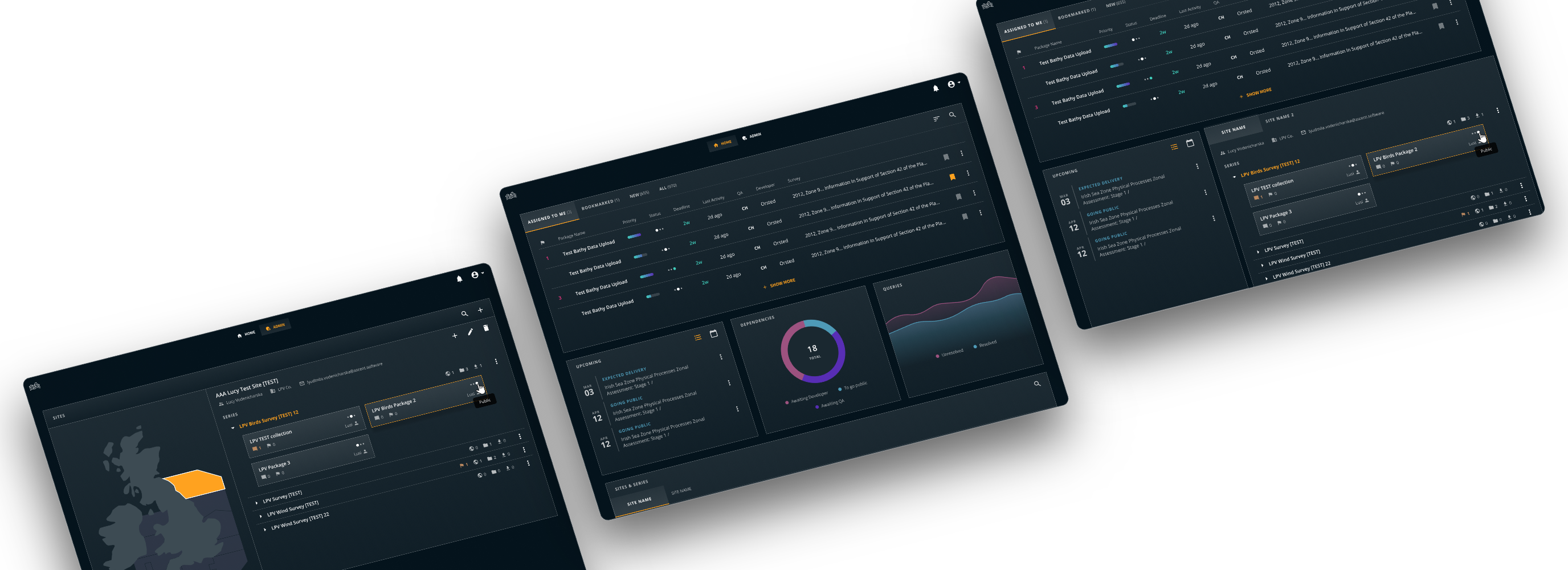
Ascent package dashboard and admin screens

The Ascent Design Practice

Building a Design Function From Nothing, Inside a Business That Had Never Had One

Client
Ascent
Role
UX Lead
Timeline
September 2020 to January 2022

In this case study

  • Built the design function from nothing
  • Shaped the offering directly with Sales, not in isolation
  • Defined three sellable design roles and packages
  • Hired and mentored senior full-stack designers
  • Delivered for major clients including Virgin Galactic and the Crown Estate

The problem

Ascent was a digital transformation consultancy, three to four thousand people, spread across the UK, Malta, Bulgaria, Spain and Portugal, running Agile, product-led engagements for clients across healthtech, space, retail, government and enterprise. Design wasn't a practice there, though. It was whatever the person staffed on a given engagement happened to bring to it.

That meant no consistent roles, no repeatable way to run a discovery or a workshop, and nothing Sales could point to when a client asked what design would actually get them. Every engagement started from a blank page, and design's value inside the business was invisible outside the room it happened in.

The approach

I joined as UX Lead, and from day one I was also staffed directly on client-facing engagements. Building the practice was never a dedicated mandate with protected time, it had to happen in whatever space was left around delivering live client work, and that constraint shaped almost every decision I made about how to build it.

The real challenge wasn't designing a good UX practice in the abstract, it was shaping one that could actually work inside a consultancy: an offering Sales could sell and clients would pay for, and one that let design genuinely help solve problems and bring value Ascent hadn't been able to offer before. To ground it in something more than opinion, I researched widely across Design Thinking, Lean UX, Agile UX, research methods and workshop formats, and mapped all of it out to work out what would actually hold up inside a consultancy's pace and structure.

Affinity diagramImpactEffortProblem statementImpactEffortFive whysImpactEffortBrainstorm workshopImpactEffortIdea evaluation matrixImpactEffortIdea affinity mapImpactEffortValidation boardImpactEffortLo-fi prototypeImpactEffortHi-fi prototypeImpactEffortInteractive demoImpactEffortDefineIdeatePrototype

From there I kept a continuous back-and-forth with Sales, testing what the market actually wanted and pressure-testing whether what I was proposing could be sold at all, rather than designing the practice in isolation and hoping it landed. Part of that shaping work was building my own version of an Agile loop, adapted to how design actually needed to move inside client engagements rather than borrowed wholesale from a textbook.

DesignValueBusinessGoalsMarketSignals

That work is where the model came from. I defined three roles a designer could take on, each with sized packages built around desired and reasonably predictable outcomes, so the business could operate efficiently without sacrificing the value clients actually got. High impact and low effort became the guiding words from a design point of view. It's also why I hired specifically for full-stack designers: demand for any one role or package size was impossible to predict deal to deal, so I needed people who could flex across all three roles at whatever capacity a given engagement called for.

Hiring/Onboarding criteria UXDesignerUIDesignerUXResearcherDesignpractice

Delivering that model meant building the hiring side just as deliberately: interview processes, evaluation tasks, and clear criteria for what a senior, full-stack designer at Ascent actually needed to cover. I recruited, onboarded and mentored two senior designers into those roles, with real coaching and goal-setting behind their growth rather than leaving it to chance.

The model proved itself across a genuinely wide range of clients: Virgin Galactic, Brewdog, Tropic, the Crown Estate, Teva, Hanson Wade, and others across space, retail, government and healthcare. Different industries, different stakeholders, the same repeatable practice underneath each one.

Virgin Galactic
Brewdog
Tropic
The Crown Estate
Teva
Hanson Wade

The impact

By the time I left, Ascent had a functioning UX practice where there hadn't been one: three defined roles, a package structure Sales actually used, two senior designers who'd grown inside it, and a track record spanning space, government, retail and healthcare clients, all built while I was still carrying a full client-facing workload myself, not instead of it.

Looking back, what mattered most to me wasn't any single deliverable. It was that a business which had never invested in design came to trust it enough to package and sell it, and that this happened while I was still carrying a full client-facing workload throughout.

PMDesignFront endBack endAgile coachingClientchallenge

Selected work

Home: packages assigned to me, upcoming milestones, dependencies and open queries.
Sites and series, with package status at a glance.
Admin: sites on a map, with series and packages alongside.

Selected work

Virgin Galactic

Loading
News
Details
Suit
Suit detail
Unity